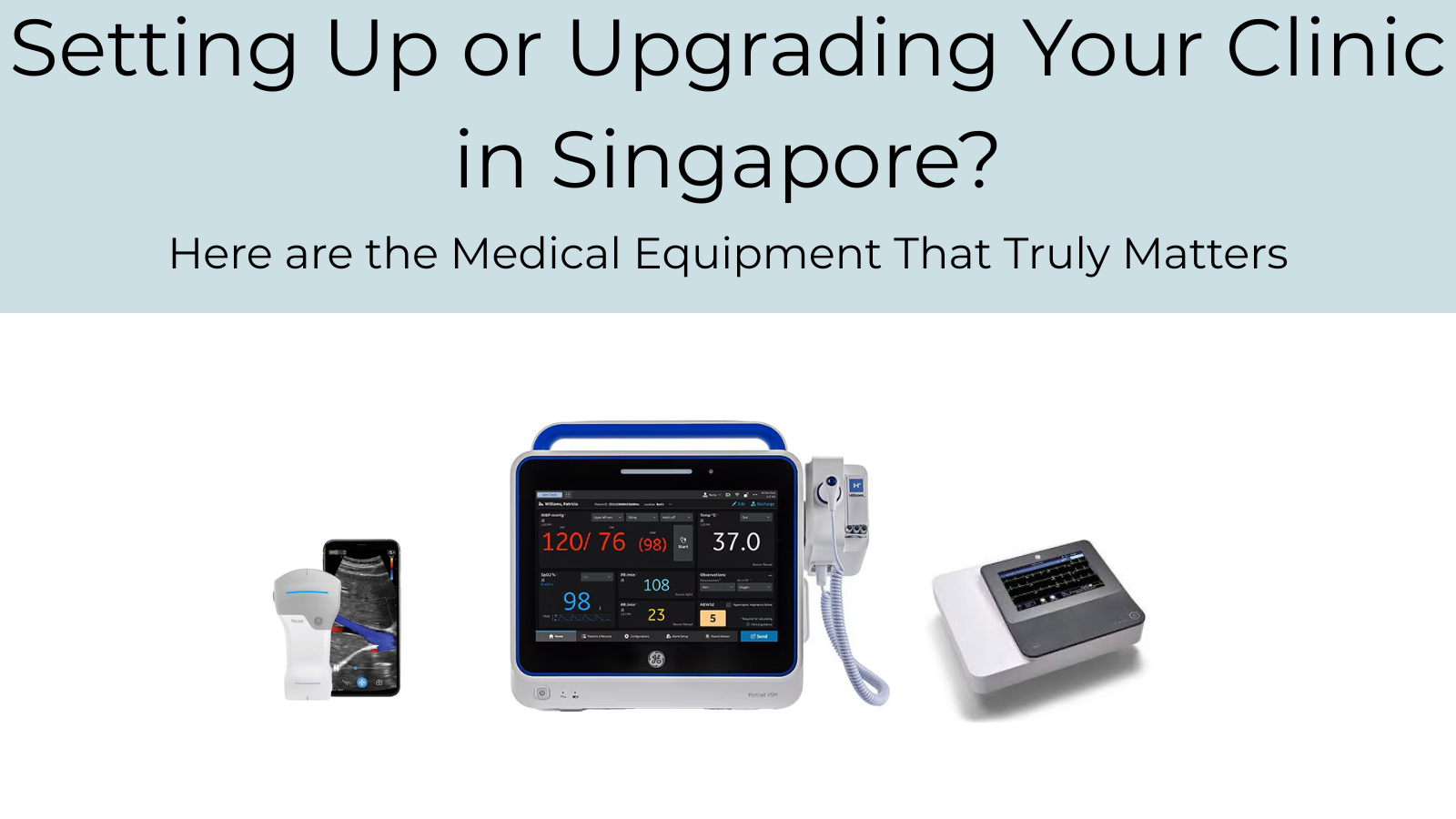
When it comes to opening a new private clinic or refreshing an existing practice, picking the right equipment is one of the most important decisions you’ll make. Deciding between what is essential and good-to-have can determine how efficiently and confidently you can care for your patients.
With so many products in the market, the decision-making process can become arduous and complicated. That’s where our guide can help, here is a practical breakdown of the key equipment most Singapore clinics rely on a day-to-day basis.
Electrocardiogram (ECG) Machines
An ECG machine can help asses patients dealing with a variety of issues from chest discomfort, hypertension or underlying cardiac concerns. The standard ECG evaluates rhythms and identifies potential abnormalities, the 12 lead ECG provides a comprehensive view of cardiac electrical activities providing a more accurate diagnosis and management.
When choosing an ECG machine, consider:
- Accuracy – Of analysis software and interpretation.
- Ease of use – Fast setup and intuitive interface for clinic staff.
- Connectivity – Integration with National Electronic Health Record (NEHR).
- Service support – Availability of local support for maintenance and repairs.
Vital Signs Monitors
A vital sign monitor is an all-in-one tool for patient assessment. From blood pressure readings, oxygen saturation (SpO2) to providing accurate temperature readings. It is widely used across private and corporate clinics due to its accuracy, portability and easy of use. In just seconds it can provide a clear overview of a patient’s health.
When selecting vital signs monitor, key factors include:
- Measurement accuracy – Across different patient types.
- Battery life and mobility – Especially in multi-room clinics.
- After-sales support – To ensure consistent performance.
Automated External Defibrillator (AED)
An automated external defibrillator (AED) should be available in every clinic. While most clinics hope never to use one, it remains a critical part of basic life-support preparedness. Sudden cardiac arrest is unpredictable. With the help of an AED, rapid intervention can improve survival when delivered within seconds. Current models are easy to operate, offering voice prompts and automated rhythm analysis to enable rapid shock delivery while CPR is being performed.
Weighing Scales
A simple but indispensable tool, a weighing scale is used in nearly every consultation. Whether tracking BMI, monitoring chronic conditions, or managing paediatric growth, accurate weight measurement forms the foundation of preventive and ongoing care.
Modern digital scales with integrated height measurement or BMI calculation features can improve efficiency.
Handheld Ultrasound
For clinics offering general diagnostics, family medicine, or women’s health services, the handheld ultrasound can be a game-changer. Its portability and image quality allow clinicians to perform quick point-of-care scans without requiring a traditional ultrasound machine.
Common use cases include abdominal checks, obstetric monitoring, and musculoskeletal imaging. When selecting a device, consider:
- Image quality – Good image quality leads to better diagnosis.
- Wireless connectivity – For image sharing and storage.
- Multiprobe solution – For scanning different parts of the body.
Stethoscope
No clinic is complete without the most timeless diagnostic instrument – the stethoscope. It remains essential for routine check-ups, respiratory examinations, and heart auscultation.
When selecting one, focus on:
- Acoustic clarity – For accurate diagnosis.
- Durability and comfort – Especially for daily use.
Even in an increasingly digital environment, a good stethoscope remains the most used instrument in any physician’s toolkit.
Otoscope
An otoscope is an essential diagnostic tool for examining the ear canal and tympanic membrane. It allows clinicians to assess patients presenting with ear pain, infection, or hearing loss, and is especially crucial in family and pediatric care.
When selecting an otoscope, consider:
- Light quality – Bright, focused illumination for clear visualization of the ear canal.
- Lens clarity and magnification – Essential for detecting subtle abnormalities.
- Durability – Sturdy construction for long-term daily use.
Medical Refrigerator
A medical refrigerator plays a vital role in ensuring the integrity of temperature-sensitive medications and vaccines. Unlike standard household units, medical-grade refrigerators maintain strict temperature control and uniformity, essential for compliance with MOH and cold-chain standards.
When choosing a medical refrigerator, key considerations include:
- Temperature stability – Consistent cooling across all compartments.
- Alarm systems – Alerts for temperature deviations or power failures.
- Storage capacity – Adequate space for vaccines, and samples.
Bringing It All Together
Setting up a clinic doesn’t require overinvestment in specialized or hospital-grade systems. Instead, it’s about building a reliable foundation of trusted, everyday tools from ECG and vital sign monitors to weighing scales and stethoscopes.
Working with local, authorized distributors helps ensure that your medical devices comply with Singapore’s regulatory standards, are backed by dependable after-sales support, and deliver lasting performance. When planning a new clinic or upgrading existing facilities, an experienced equipment provider who is committed to a long-term partnership ensures that you build a safe, efficient and patient-centered environment from the start.