
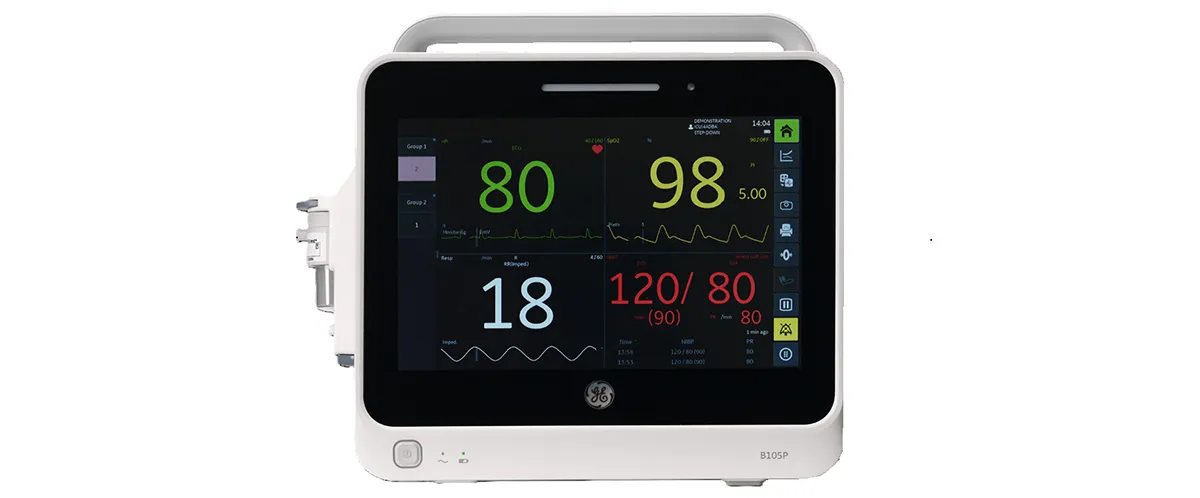
Accurate patient observation plays a vital role in modern healthcare, particularly when clinicians need continuous information about a patient’s physiological condition. Hospitals, clinics, emergency departments, specialist centres, and other healthcare facilities rely on monitoring equipment to support timely assessment and clinical decision-making. A Patient Monitor can provide healthcare professionals with important measurements in a clear and accessible format, helping them observe changes during treatment, recovery, or routine care.
Modern monitoring systems have developed considerably, offering different configurations for general wards, intensive care environments, operating rooms, emergency settings, and outpatient facilities. Depending on the model, a monitor may display parameters such as heart rate, blood pressure, oxygen saturation, respiratory rate, temperature, and electrocardiogram readings.
Choosing suitable equipment requires careful consideration of clinical requirements, monitoring parameters, usability, connectivity, reliability, and after-sales support. Healthcare providers should therefore evaluate how a monitoring system fits their existing workflow rather than selecting equipment based solely on features or price.
What Is a Patient Monitor and How Does It Work?
Patient monitors are electronic medical devices designed to measure and display physiological information from patients. Depending on the model and configuration, the equipment can monitor several parameters simultaneously, allowing healthcare professionals to observe a patient’s condition without relying entirely on separate measuring devices. This makes monitoring more efficient in environments where patient status may change quickly.
Sensors and accessories collect physiological signals from the patient and transmit the information to the monitor. The system processes these signals and presents the measurements on a screen, while many models can generate visual or audible alerts when readings move beyond configured limits. These features allow clinicians to recognise potentially important changes and respond appropriately.
Where Can You Buy a Patient Monitor in Singapore?
Healthcare facilities can source monitoring equipment from specialised medical equipment suppliers, distributors, and healthcare technology providers operating in Singapore. Selecting an established supplier is important because medical monitoring equipment requires more than simple product delivery. Proper installation, user guidance, maintenance, technical assistance, and access to replacement components can all influence the long-term value of the equipment.
Before purchasing, healthcare providers should assess the monitor’s intended application, supported parameters, display configuration, portability, connectivity, and compatibility with existing systems. It is also useful to review warranty provisions, servicing arrangements, training support, and supplier responsiveness to ensure the equipment remains dependable throughout its operational life
Why Is a Patient Monitor Important in Healthcare?
Continuous monitoring provides healthcare professionals with timely physiological information that can support patient assessment and treatment decisions. Instead of relying only on occasional measurements, clinicians can observe trends and identify changes that may require further assessment. This is particularly valuable in settings where patients require closer observation or where their condition can change rapidly.
Monitoring equipment can also improve workflow efficiency by displaying several parameters on a single interface. Depending on the model, clinicians can review vital measurements simultaneously and configure alerts according to clinical requirements. Consequently, appropriate monitoring technology can support more organised patient observation while helping healthcare teams respond efficiently to changing conditions.
Professional Patient Monitors for Hospitals and Clinics
Hospitals and clinics require monitoring equipment that can accommodate different patient-care environments and operational demands. Professional monitors may offer multiple parameter configurations, larger displays, adjustable alarm settings, data storage, connectivity features, and accessories designed for specific clinical applications. The appropriate configuration depends on factors such as patient type, department, monitoring frequency, and the level of observation required.
Durability and usability are equally important considerations. Equipment used throughout busy healthcare facilities should be intuitive enough for staff to operate efficiently while remaining robust under regular use. Healthcare providers should also consider cleaning requirements, portability, battery performance, and integration with existing workflows when selecting professional monitoring equipment.
Medical Patient Monitoring Equipment in Singapore
Healthcare facilities use different types of monitoring equipment depending on the patient’s condition, clinical environment, and level of observation required. Common systems can measure parameters such as blood pressure, oxygen saturation, pulse rate, respiratory rate, temperature, and ECG, while more advanced configurations may support additional measurements for specialised care.
The right equipment should match the clinical purpose rather than simply offering the largest number of features. General wards may require straightforward and easy-to-operate systems, whereas critical-care environments can require more comprehensive monitoring capabilities. Selecting equipment according to actual clinical needs helps healthcare teams maintain efficient workflows while avoiding unnecessary complexity.
How to Choose the Right Patient Monitor in Singapore?
Several factors should be evaluated before purchasing medical monitoring equipment. Healthcare providers should first identify the physiological parameters they need to monitor and determine whether the device is intended for continuous bedside observation, occasional assessment, transport, or a specialised clinical environment. Screen visibility, alarm functionality, portability, battery life, and ease of operation should also be considered.
Connectivity can become equally important in modern healthcare environments. Depending on the facility’s requirements, a monitor may need to communicate with central monitoring systems or other hospital technologies. In addition, suppliers should provide appropriate documentation, training, maintenance, and technical support so healthcare professionals can use the equipment confidently and effectively.
How Can a Medical Equipment Supplier Support Healthcare Providers?
A dependable supplier can support healthcare facilities throughout the equipment lifecycle rather than simply delivering the monitor. Professional assistance may include product selection, installation, demonstrations, user training, preventive maintenance, troubleshooting, and technical support. These services can help healthcare providers maximise equipment reliability and minimise operational interruptions.
Supplier expertise is particularly valuable when facilities are comparing different models or planning upgrades to their existing monitoring systems. A knowledgeable provider can assess the clinical application, recommend appropriate configurations, explain relevant features, and help healthcare teams understand how the equipment can fit into their existing workflow.
Why Choose Fortuna Scientific?
Fortuna Scientific provides medical equipment solutions designed to support healthcare professionals with dependable technology and practical product options. Its focus on quality products and professional service helps healthcare facilities identify equipment suited to their specific clinical requirements.
The company also supports customers beyond the initial purchase by providing product guidance and responsive assistance. This approach helps hospitals, clinics, and other healthcare providers make informed equipment decisions and maintain efficient medical operations.
Conclusion
Selecting the right Patient Monitor is an important decision for healthcare facilities seeking accurate and efficient patient observation. The appropriate equipment can help clinicians monitor essential physiological parameters, recognise changes promptly, and maintain a more organised approach to patient care.
Healthcare providers should consider clinical requirements, device functionality, usability, connectivity, reliability, and after-sales support before making a purchase. Partnering with an experienced medical equipment supplier can further simplify the selection process while providing valuable technical and product support throughout the equipment’s service life.
Frequently Asked Questions
Depending on the model, a patient monitor can measure parameters such as heart rate, blood pressure, oxygen saturation, respiratory rate, temperature, and ECG.
Yes. Different models are designed for various healthcare environments, including hospitals, outpatient clinics, specialist centres, emergency settings, and other medical facilities.
Important considerations include required parameters, intended clinical application, display size, alarm functions, portability, battery performance, connectivity, ease of use, and supplier support.
Some professional models offer connectivity features that allow monitoring data to be integrated with compatible central monitoring systems or other healthcare technologies.
Supplier support is important because installation, training, maintenance, troubleshooting, and technical assistance can help healthcare facilities operate monitoring equipment safely and efficiently.